If you’re getting quotes for a new boiler, you’ve probably noticed no two prices ever look quite the same. That’s because the cost of a new boiler installation depends on several things: the type of boiler, the condition of your existing pipework, where the boiler is going, and what extra parts the job needs. I’ve priced up installations right across Essex and Hertfordshire, and it’s rarely the boiler itself that causes the biggest swings in price. It’s usually what’s involved in fitting it properly.
We won’t quote figures here, since every property is different and the only way to get an accurate number is a proper survey. What we can do is walk through the factors that actually move the price up or down, so you know what to ask your installer about.
The type of boiler you’re having fitted
Combi, system and regular (heat only) boilers are all priced differently, and it’s not just the unit cost. A combi boiler installation is often more straightforward if you’re replacing a combi with a combi, because the pipework and controls are already in roughly the right place.
Switching boiler types, for example moving from a regular boiler with a hot water cylinder to a combi, is a bigger job. It usually means removing the old cylinder and any associated tanks, rerouting pipework, and sometimes patching or redecorating the areas that are exposed once they’re gone. That extra work adds to the cost, but it can also mean a smaller, less cluttered airing cupboard and mains-pressure hot water at the end of it. It’s one of the most common jobs we quote for on a boiler replacement in Loughton, where a lot of the older housing stock was originally fitted with regular boilers and cylinders.
The condition of your existing pipework and system
If your pipework, radiators and system components are in good working order, a straightforward swap keeps costs down. Older systems often need more attention. Corroded pipework, old fittings that don’t meet current standards, or a system that’s never been power flushed can all mean extra work is needed before or during the installation to make sure the new boiler runs efficiently and reliably.
This is one of the main things we check during a survey, because fitting a new boiler onto a system full of sludge or debris is a false economy. It can shorten the life of the boiler and affect your warranty. It’s something we see a lot when quoting for a new boiler installation in Epping, where plenty of properties still have their original 1970s and 80s pipework in place.
Where the boiler is being installed
A like-for-like installation, where the new boiler goes in the same spot as the old one, is usually the most cost-effective option because the flue, gas supply and pipework are already in place. Relocating the boiler to a different room, or moving it from a cupboard to a loft (or vice versa), adds cost because it involves extending pipework, running a new flue route, and sometimes additional condensate pipe work to get waste water away safely.
Flue length and route matter too. A boiler fitted close to an external wall is generally simpler than one that needs a long horizontal or vertical flue run to get outside.
The size and output your home needs
Boilers are sized according to how much heat and hot water a property needs, based on things like the number of radiators, bathrooms, and how many people are likely to want hot water at once. Fitting a boiler that’s undersized for the property means it’ll struggle to keep up, especially in a bigger house or one with multiple bathrooms. Oversizing wastes money and can make the system less efficient. Getting this right is part of what a proper survey is for, and it directly affects which boiler (and therefore which price bracket) is right for your home.
Extra parts and system upgrades
A few additional items commonly come up once an engineer has assessed the system, including:
- Filters and inhibitors to protect the new boiler from debris in the existing pipework
- A power flush if the system has a build-up of sludge or corrosion
- A new or upgraded thermostat, including smart thermostats for better control over heating
- Additional isolation valves or pipework to bring an older system up to current standards
- Condensate pipe upgrades, particularly if the current route is prone to freezing in winter
None of these are optional extras added for the sake of it. They’re there to protect the new boiler and make sure it’s covered under warranty, so it’s worth asking your installer to explain clearly why each one is being recommended for your property.
The installer’s accreditations and the guarantee on offer
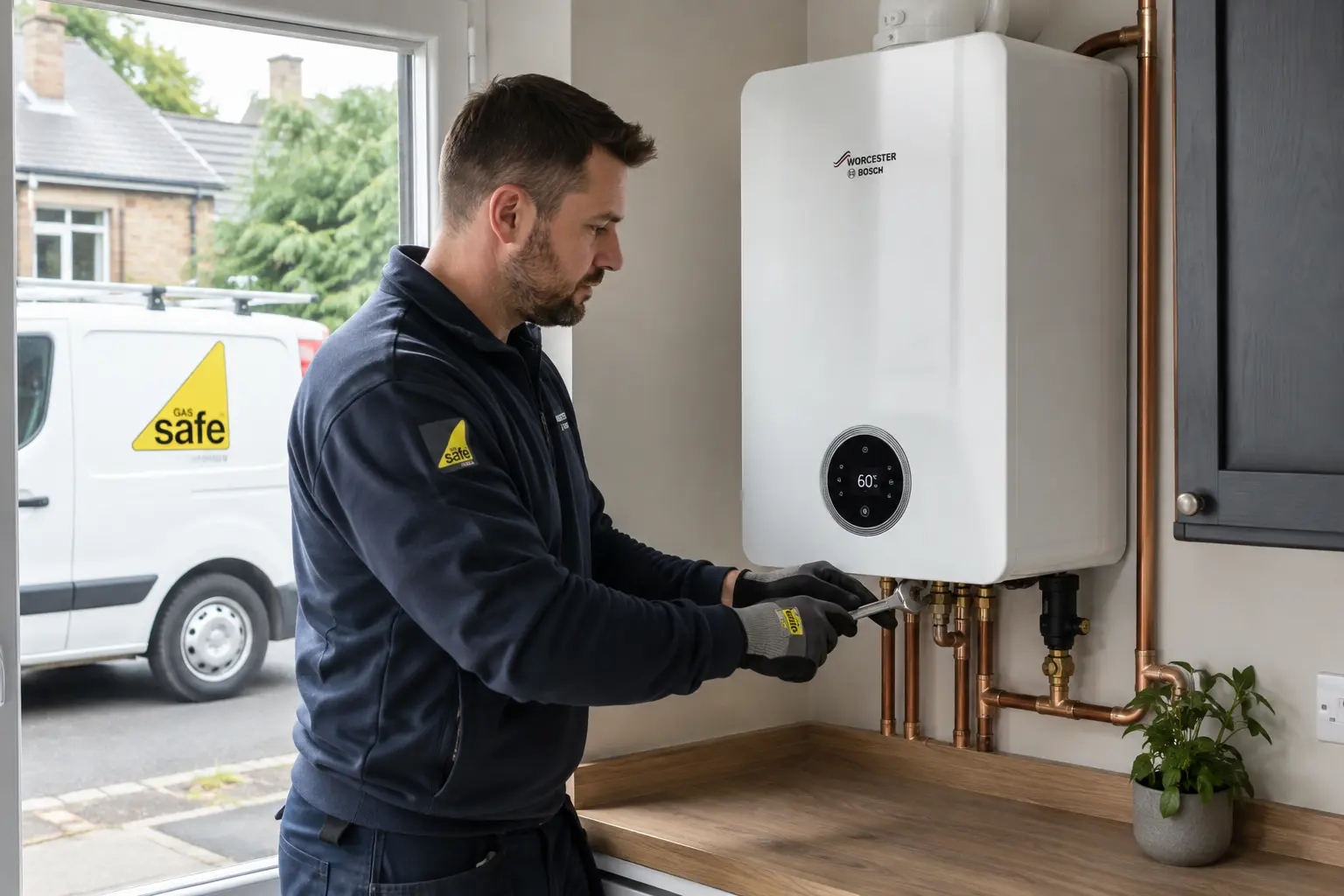
This is one factor that’s easy to overlook, but it affects long-term value rather than just the upfront number. As a Worcester Accredited Installer, we can offer extended guarantees on Worcester boilers, up to 12 years on some models, compared with the standard manufacturer guarantee. A longer guarantee generally reflects a higher standard of installation, since manufacturers only extend it through accredited installers who meet their training and quality requirements.
This comes up often on a boiler upgrade in Buckhurst Hill, where homeowners are typically moving from an older, less efficient model onto a modern Worcester condensing boiler and want the reassurance of a longer warranty to go with it.” Clear antecedent, same anchor and link intact.
Do I need to replace my boiler, or can it be repaired?
Not always. If your current boiler is relatively young and the fault is a single component, a repair may be the more sensible option. If it’s older, breaking down repeatedly, or parts are becoming hard to source, replacement usually works out better value over time. Our service and repairs team can assess your existing boiler and give you an honest recommendation before you commit to a new installation.
Getting an accurate quote
Because so much depends on the individual property, the only reliable way to know what a new boiler installation will cost is a home survey. Our new boiler installation service includes a full survey and a written quote, so you know exactly what’s included before any work starts, with no call-out charge for the visit.
We carry out boiler installations across Essex and Hertfordshire, including Epping, Loughton, Buckhurst Hill, Chigwell, Chingford, Harlow, Broxbourne and the surrounding areas, so if you’re weighing up a boiler replacement or a boiler upgrade, we’re happy to talk through what your property is likely to need before you commit to anything.
FAQs
Does a bigger boiler cost more to install?
Not necessarily more to install, but a higher-output boiler is usually a higher unit price. The right size for your home is based on the number of radiators, bathrooms and hot water demand, not on choosing the biggest option available.
Will I need to replace my radiators when I get a new boiler?
Not usually. If your existing radiators are in good condition and correctly sized for each room, they can normally stay in place. An engineer will flag it during the survey if any radiators need attention.
Is it cheaper to keep the same type of boiler?
Generally, yes. Replacing a combi with a combi, or a regular boiler with a regular boiler, avoids the extra work involved in removing cylinders or tanks and rerouting pipework, which keeps the job more straightforward.
Does the guarantee length affect the price?
It can factor into the overall quote, since installations carried out to the standard required for an extended manufacturer guarantee (such as our Worcester Accredited status, offering up to 12 years) reflect a higher level of installation quality.